Saturday, May 28, 2016

Interview With Author Erik Daniel Boudreau

Recently I had the wonderful opportunity to interview Erik Daniel Boudreau, author of the thriller Tidal Force.  Erik has now delved into the fantasy genre with his latest offering, Mystic Pursuit, the first book of The Inner Realm trilogy. In this interview he talks about Mystic Pursuit and events in his life that became part of its creation.

Tell us a little bit about yourself. 
My name is Erik Daniel Boudreau, and I’m a Naturopathic Doctor by day, using holistic strategies
(including nutrition, natural supplementation and exercise) to help patients lead healthier, more balanced lives. The rest of the time, I’m busy writing, keeping in shape, and spending time with my family.

What is the name of your latest book and what inspired it?
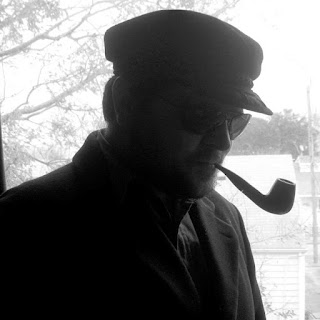
Author Erik Daniel Boudreau

My new book is book one of The Inner Realm trilogy, and is titled Mystic Pursuit. I suppose the main driving force behind the story relates to what was going on in my personal life at the time. Around two years ago, while contemplating the subject of my next book, I was diagnosed with thyroid cancer. Shortly thereafter, I underwent an extensive surgery as well as a radiation treatment that was followed by an eight day period of “contact isolation” (essentially spending a week living in seclusion in my guest bedroom, with my very supportive wife leaving plates of food outside my door three times a day). During that time, propelled both by a desire to undertake the most ambitious project I could think of—an epic fantasy trilogy—as well as a need to escape from the stress and monotony of my seclusion, I began writing Mystic Pursuit. In fact, over those eight days, I completed two-thirds of the first draft, completing the rest over a two-week span after my “release” back into society. Luckily, I now find myself in great health and in possession of a story that I’m quite proud of.

How would you categorize your book?
Mystic Pursuit is the opening act of an epic fantasy, serving both to establish the world and the characters within it, and to provide its own, discrete adventure.

How does the title relate to the story?
https://www.amazon.com/Mystic-Pursuit-Inner-Realm-Fantasy-ebook/dp/B01EKMMBRS?ie=UTF8&keywords=mystic%20pursuit&qid=1464189732&ref_=sr_1_1&sr=8-1
Available May 30, 2016

The title Mystic Pursuit pertains to three of the world’s four unique groups of beings, with the fourth being humans. The three mystic groups, or orders, consist of the spirit mystics, the life mystics, and the matter mystics, with each in possession of a specific innate ability that, in concert with the other orders, helps to keep the world in balance. When a fateful premonition throws this balance into disarray, a human named Thayliss must confront a sinister force bent on harnessing the power of all mystics.

Describe your writing process.
My writing process involves incubating a few key ideas for a while until a coherent story starts taking shape, with the central characters at least generally sketched out. At that time, I begin plotting the story’s main events as bullet points, gradually filling the spaces between them with additional plot developments. Once I feel that I’ve got enough of a skeleton in place (typically 1-2 pages of notes) I start the actual writing process, simply working my way from point to point, fleshing out the ideas and building the story. Of course, I’ve learned to always be ready to take the story in an unanticipated direction if that’s what feels right, even if that contradicts my original outline.

What is the best advice and the harshest criticism you have received as an author? What have you learned from either?
My best advice and my harshest criticism are basically the same observation, given with varying degrees of tact. “Show don’t tell!” is something that’s come up several times, and has been an invaluable lesson. I think that giving your characters motivation, history, and perspective, regardless of the genre, is crucial to creating a rich, detailed, interesting story. However, I know too well the tendency to simply devote page upon page to divulging this information. A valuable lesson for me has been to show the reader what your characters are thinking through their actions, and how they speak as much as the words they say. Similarly, it’s much more powerful to build a back story by gradually revealing small fragments, little by little, as opposed to kicking off the story with a long-winded, almost academic introductory chapter.

What is next for you?
I’ve since completed a literary work that I’m currently editing, and have also just finished the first draft of The Inner Realm, book two!


Mystic Pursuit

It was a world like our own, in an age lost to time. For millennia, humans co-existed peacefully with three distinct orders of sentient beings, or mystics, each helping to maintain balance by governing either life, matter or spiritual energy. Overseeing this was one solitary being, the Voduss Grei--the Gray Mystic. Acting upon a premonition of the world's end, the last of the Gray Mystics, Noryssin, decimated a peaceful human village, setting off thirty years of chaos. Lakos, one of the few survivors from the tragedy, emerged seeking revenge against not only the Voduss Grei, but all mystics. Caught in the conflict was Thayliss, a human who had spent his life living peacefully among the Ohlinn, or spirit-mystics. Finding his adoptive family murdered and himself exiled from the only community he had ever known, Thayliss must try to stop Lakos from his plot to control all mystic orders and assume the throne of the Voduss Grei.


You can find Erik at the following:

Website:  www.erikdanielboudreau.com

Twitter: @edanielboudreau

Mystic Pursuit is available at Amazon:  ebook

                                                                paperback

Sunday, April 24, 2016

Interview With Author Ben Willoughby

   Recently I had the wonderful opportunity to interview author Ben Willoughby.  I first became acquainted with Ben and his work after reading his fantasy novel, Gods on the Mountain.  In the course of this year Ben has not only shown a talent for writing fantasy but for horror as well.  In this interview Ben tells us about his new release, Deadly Whispers, what inspires his stories, and what lies ahead in his writing future.
Tell us a little bit about yourself.
Author Ben Willoughby
   Well first off, thanks for inviting me to your blog! It's an honor!                                                    
As for me, my name is Ben Willoughby, and I live in the southeast United States. I’m very happily married to my beautiful wife Mary, and we have a wonderful little one-year old daughter.
   I’m an indie author, and my genres include fantasy and horror. My wife tells me I need to work on a romance novel, but I haven’t conceived one yet.


What is the name of your latest book and what inspired it?
   I have a horror novel coming out on April 26 called Deadly Whispers. It deals with the concept of ASMR – or Autonomous Sensory Meridian Response. It’s the nickname for that sensation you get whenever a sound or action triggers a relaxing feeling in your scalp (eg., tingles). I first discovered the term while watching an instructional massage video for relaxation purposes; I soon discovered that there’s a whole subculture for it. If you go on YouTube, you’ll find dozens of ASMR videos, with someone (mostly women, though some men do it as well) speaking to the viewer and simulating various sounds with a high tech microphone.
   Eventually I came up with this idea: what if someone did some really disturbing ASMR videos? I had the vision of a beautiful woman gutting someone alive and using their organs for the purposes of sound. I developed around that idea, and came up with the storyline of Deadly Whispers. I wrote it intending it to be a dark comedy, albeit with some serious elements thrown in. Granted, I have a very sick sense of humor. Just recently, when I was editing the book, I was reading one of the murder scenes. The dialogue by the killer is exactly like dialogue found in most ASMR videos, but he’s doing terrible, horrible things while she’s saying it. I started cracking up reading it. My wife asked me what I was laughing at, and when I told her, she just rolled her eyes.
                                                             Introduce us to your book’s characters.  What is it about these characters that appeal to you as 
http://www.amazon.com/Deadly-Whispers-Ben-Willoughby-ebook/dp/B01DFQG4UK/ref=sr_1_1?s=digital-text&ie=UTF8&qid=1461558599&sr=1-1&keywords=deadly+whispers+by+ben+willoughby
Available April 26, 2016
a writer?
The story focuses around three key characters.
   Rob is a man suffering from a quarter-life crisis, mainly from the fact he’s still single. Out of desperation, he goes on a mail order bride website. There, he comes across a beautiful Eastern European girl named Anna. He eventually falls in love with her, and she moves to America to marry him.
   Anna, who I just mentioned, is a beautiful woman who does ASMR videos. As is probably already inferred, she’s not alright in the head, and her ASMR videos involve someone suffering or dying. There’s a reason she does this, which is explained in the book.
   Finally, there’s Mike, who is Rob’s best friend. He’s a private detective in his day job, and he begins to suspect Anna. He puts his smarts to good use in order to find out the truth about her.
   As I wrote the story, I realized near the end that it had developed into a relational triangle with Rob as the central point: Anna does love Rob, and wants to keep her relationship with him; Mike, like any good friend, doesn’t want his buddy ending up with a crazy girl. I think most readers can sympathize with either Anna or Mike in this regard: most women will know what it’s like to want to make your relationship work, even if outside forces threaten it; most men will know of at least one friend in their life who ended up with a crazy girl and were nearly destroyed by her.
   One thing I was actually quite proud about is my wife, who loves romance, felt a real connection between Rob and Anna. She actually told me, “If there weren’t so much killing in this story, it would actually be pretty sweet.”

Does the title relate to the story?
   It’s actually in reference to a lot of ASMR accounts that have the word “whispering” or “whispers” in the title, because using the sound of the human whisper is so common in ASMR. (In fact, it’s actually seen as overplayed in some circles.) The working title was Deadly ASMR, but changed it to Deadly Whispers to connect it closer to the subculture. I’ll admit it’s not the most clever of names, but it works for what it is.

Tell us more about the cover design.  How involved were you with creating the cover?
   With the exception of my fantasy book Gods on the Mountain, I do my own artwork for my book covers. Given I do graphic design in my day job, I have some experience with that. My goal is to try to come up with something to catch a viewer’s eye that also won’t end up on the website Lousy Book Covers. (Which, by the way, every indie author should go to; take a gander, then pledge to make your own covers better.)
   With the cover for Deadly Whispers specifically, it just plays on the idea I mentioned earlier of a violent ASMR artist. A woman’s slender hand holding a bleeding heart up to a microphone probably gets the point across about the book’s content!
   Also, if anyone thinks it looks way too violent, they should probably know that the initial cover design was a lot cleaner. When I shared it on Twitter and asked for feedback, people told me to make it MORE bloody.

Tell us something about your book that isn't mentioned in the synopsis.
http://www.amazon.com/Raw-Head-Novelette-Ben-Willoughby-ebook/dp/B00YYVFXZS/ref=asap_bc?ie=UTF8
Available Now at Amazon
   People who have followed my work will know I’ve written horror in the past: I wrote about a pregnant woman plagued by a demon in Raw Head; I wrote about a young woman protected by her deceased father in Daddy’s Girl; I wrote about a haunted house in The House That Homed. Almost all of them (save perhaps House, which was comedic horror) scared my wife.
   This story, however, absolutely terrified her. This surprised me, because there are no monsters, demons, or ghosts in it, just normal people. However, I can’t even talk about the story with her for a few minutes before she says, “Alright, let’s talk about something else!” In fact, I ruined ASMR for her forever – she can’t watch an ASMR video, or hear someone talking in an ASMR-inspired voice, without becoming freaked out. She also told me once, after reading a chapter, “You know, if I didn’t know you personally, I’d think you were a sick man.”
   Potential readers might also be amused to know that there’s a scene in the book that was inspired by a nightmare my wife had, as a result of reading a few chapters. I won’t say which scene, though. You’ll have to read it and guess!

Give us a summary of your book in a tweet.
“A dark comedy about a murderous ASMR artist.”

How much of your experience is in your writing?
   It depends. The pregnancy in Raw Head was heavily influenced by our own experiences with the birth of our daughter. In Daddy’s Girl, a lot of what Alex and her father did in the morning was what my own daughter and I did in the morning. The deep depression that Edmund suffers from in Gods on the Mountain is based on my own struggles with depression.
   In Deadly Whispers, a lot of the sweet (albeit cheesy) talking between Rob and Anna was inspired by the way my wife and I talk to each other. Some of the dialogue in the scene where       Mike and Rob play video games was directly taken from playing video games with college buddies. The scene where Mike’s policewoman friend, Sabrina, is checked out by a lesbian barista, came from a real incident where a female friend of mine was checked out by a lesbian hostess.


Available Now at Amazon
Describe your writing process.
   Obviously, every story starts with an idea. I think that’s a given. (No pun intended – wait, was that a pun?) A lot of my ideas come from reading too much into something, or researching a subject, and then something just clicks. For example, I was talking with a neighbor, and she told me about the Spanish version of the bogeyman. I researched the name, found other bogeymen and folklore spirits, and came across the story of Raw Head. From there developed the idea for my novelette by the same name.
   Before I write the story itself, what I first do is sit down and write a synopsis. I jot down all the characters I can think of at that moment, any locations I’d need to remember the name for, and then a simple summary of what happens in the story. When I sit down and work on the actual manuscript, I open up the synopsis as well, and reference it whenever there’s need to do so.
   I know a lot of authors shy away from doing this, because they’re afraid it’ll hinder creativity, but I use my synopsis as a guideline, not a measuring stick. If I come up with another character, I go back and I add it to the character list. If I come up with another location I might need to remember the name of, I go back and add it to the location list. If I want to change the story around, I’ll go to the summary and shift things around. In other words, my synopsis and my manuscript really feed off each other, rather than one controlling or limiting the other.
   By the by, a lot of my writing happens at night, when I come home from work. Partially this is because that’s often the only time I have to write, and partially this is because my wife enjoys it. She says hearing me type relaxes her and helps her sleep. I am not making this up. I guess in some ways my typing is her own brand of ASMR!

How much research do you put into your work?
   As I said before, a lot of my work is inspired by my reading or experiencing something, so many times my research actually comes before the creativity. For example, the reason I knew about what happens to pregnant women at the gynecologist, as seen in Raw Head, was because my wife and I experienced it firsthand with her pregnancy. I didn’t need to research it, because I was often there, in the room, when the stuff was going on. I was likewise there in the delivery room when our daughter was born, so I didn’t need to research what happened during a delivery.
   With Deadly Whispers, I had already read a bit on the world of ASMR, and was very familiar with various ASMR personalities. A few ASMR artists are actually referenced in the book, albeit not by name. Anna herself was, in terms of looks, based on a specific ASMR artist, though I won’t say who – I don’t want to ruin her career!

What are your hobbies, interests outside of writing?  Do any of these activities find their way
Available Now at Amazon
into your books?
   I like to draw, I smoke a pipe, and (mandatory if you’re a writer) I like to read, both fiction and non-fiction.
   A lot of my interests definitely end up in my work, whether as minor points or parts of the character. Edmund’s love for history and theology in Gods on the Mountain comes from my own love for those topics. That Alex’s dad rides a motorbike in Daddy’s Girl comes from my own riding a motorbike. Jenny’s love of HP Lovecraft in The House That Homed comes from my own love for his stories. In Deadly Whispers, the love Mike and Rob have for Mike’s Hard Lemonade (no pun intended) comes from my own love for it.
   It might be humorous to add here that, in The House That Homed, the characters of Homes and Scomes – two homeless guys addicted to Mountain Dew Kickstart – came from my life as well. I like to drink Kickstart, and my wife accused me of being addicted to it.

What is the best advice and harshest criticism you have received as an author?  What have you learned from either?
In college, I took a screen writing class. My professor told me these words:
“You are the most erratic writer I’ve ever met. I’ll tell you why. Your dialogue sucks, but your descriptions are beautiful.”
   He was absolutely right. I was trying too hard to be clever in my dialogue, while also taking a lot of what I had learned from other writings to come up with interesting set ups or deeper scenery. I’d like to think I’ve learned since that advice was given a decade ago, and that I’ve created better dialogue and rely on subtlety when necessary. I suppose I’ll let my readers decide that.

What advice might you give aspiring authors?
   The advice I might give aspiring authors is this: don’t fall for the trap of therapeutic thinking. I mean when you take positive-thinking to an irrational level. Not everyone who hates your work is evil. Not every critic is just a hater. Learn to weed through compliments as well as your criticism. You can learn from your enemies as much as you can be harmed by your friends. I know all this isn’t very popular to say, but I say it nonetheless.
   Too often I think people have this idea that if someone gives you anything less than a 3-star review, they must be Hitler reborn. I got a 2-star review for Gods on the Mountain, and another author asked if the reviewer was a personal enemy of mine. I didn’t really care – the vast majority of people who have read and reviewed/rated Gods loved it, so I can’t complain that somebody out in the world doesn’t like it.

What kinds of books did you read as a child?  Did the genre you read most influence your decision to become an author of the kind of books you write today?
   When I was young, I took a huge liking to Science Fiction. I loved the works by classic sci-fi authors like HG Wells and AE Van Vogt. In my preteen years, I got sucked into mystery novels, especially those about Sherlock Holmes and Hercule Poirot. In college, I finally started reading the fantasy genre, especially books by RA Salvatore.
   I can’t really say anything specific inspired me to write. I just started to write and create when I was a preteen, and found that I really enjoyed doing it. I started out writing comedy action stories in middle school and high school, then got into more serious stories in college. Whatever I wanted to write, I wrote it. I guess in some ways I still operate by that principle today. I don’t want to fit myself into the niche of “fantasy author”, or “horror author”. I know a lot of authors out there do that, and have made good money doing that, and more power to them. It’s just not for me.

What specific authors or books influenced what you write today?
   George RR Martin had a big influence on my fantasy writing. I loved how in depth he got with world building, even in some aspects that other fantasy writers never thought about. Westeros felt real to me. I won’t say everything about his world building was perfect (eg., the same house ruling a nation for thousands upon thousands of years), but it inspired me to put more thinking into the world of Calambria for Gods on the Mountain.
   HP Lovecraft had an influence on me in just how weird or surreal you can make horror. My initial idea for Raw Head was more like a murder mystery movie, going back and forth between a police detective and a pregnant woman. Then I remembered the weird dreams my wife had during her pregnancy, and decided to go a less conventional route.
   Victor Hugo also had an influence on me when I started to commit to indie writing. What I love about his work is that he has this amazing talent to build every single character in his book, no matter how minor. If there was a janitor who appeared for one page in his book, he made certain you didn’t forget about that janitor. By contrast, I’ve read some books today where you forget someone’s best friend because of how non-memorable they are.

What types of genres do you read now for pleasure? 
   I still read non-fiction and fantasy whenever I get the chance. Recently I’ve been reading a lot of horror for fun, including Richard Laymon’s stuff. I also need to give a shout-out to Kristopher Rufty, who has some fun novels.

Do you have any favorite characters, and if so, what is it about them that appeals to you?
   If I had to give a favorite literary character, it would probably be Roose Bolton from the Song of Ice and Fire series. A lot of people who have only seen HBO’s big budget fanfiction are confused by that, but if you read the books, he was what I can only describe as “deliciously creepy”. Martin captured his sociopathic nature through his actions and words without beating you over the head with it. Roose was partially the inspiration for Rhys, the main villain in Gods on the Mountain.

What is next for you?
   I have another horror novel I’ve been busily working on that I hope to release before the end of the year. The current working title is Mannegishi, and it’s an alien story mixed with Cree folklore. It harkens back a bit to Raw Head, with families and individuals going about their daily lives, dealing with normal issues, but having all that interrupted by supernatural powers.
   I’m also working on a sequel to Gods on the Mountain called The Merchant Rebellion. It’ll have Edmund and Diane return for another adventure, and will feature more Celia and of course the beloved Fulk. I certainly intend to write even more Edmund and Diane adventures in the future, and haven’t forgotten about them.
   On a side note, I sometimes joke with my wife about making a Deadly Whispers 2. I only do that because I know how much it makes her freak out. I don’t know if I’d actually do that, however – it would depend on how well the first book was received.
You can reach Ben Willoughby at the following places:

Sunday, April 10, 2016

The Summoning - Chapter 6


The Summoning (working title)
 
Chapter Six

      The morning dragged for Erick, and even though he and Ryan rode side by side, neither talked to the other. Shortly after they started out, Shayla and a couple others left the group to ride on ahead. The Nahuils traveling with the boys remained silent.
      The scenery took on a welcome change as they finally cleared the forest and traveled over a broad meadow. The sun shone down unobstructed and felt good after countless hours in the chilly shade. A light breeze played in Erick’s hair and caused the tall grasses to bend and sway in rhythmic waves. The course they were on followed the wide river they discovered a couple days ago.
      After a time the forest fell far behind, and the meadow appeared to drop away suddenly. Erick and Ryan watched the lead riders disappear over the edge and soon found themselves perched high above a long narrow valley. They looked down onto a large settlement stretched out along the valley floor. Hundreds of small buildings stood amidst orchards and gardens. In the heart of the valley rose a large stone building that looked like a fortress. Square in shape, with towers at each corner, it had a functional rather than ornate look. Rising nearly four stories, the keep dwarfed every nearby building.
      A series of long undulating switchbacks led the descent into the valley. Soon they were able to make out details of the buildings closest to them. The dwellings all seemed to be made of stone with split shingle roofs having a central hole. Tendrils of smoke curled from most of the holes, rising in the calm air. Gardens surrounded each home along with pens containing strange goat-like creatures with long hair. The scent of blossoms and fruit from the nearby orchards, and the chattering of birds filled the air.
      Erick remembered descriptions of Copper Age and Bronze Age European villages from his history classes. This setting reminded him of those villages, but it was so vivid now. Riding through the village, he watched the Nahuil going about their daily lives. Simple, but laborious, tasks of gardening, tending the animals, laundry, and splitting wood brought the setting to life. The shrill laugh of children playing with each other amongst the dwellings brought on a small smile.
      As they passed, the Nahuil glanced up from their tasks. They stared at the boys, and Erick guessed that, as new as this scene was to him, he was just as new and strange to them. Reactions were mixed. Some of the looks came off as friendly and welcoming, others were not. Erick felt like he was on a parade float passing by a crowd. A crazy urge to wave to the onlookers went through his mind, but after a time he just stared straight ahead.
      Farther into the settlement, the buildings grew larger and closer together. By the clanging, banging, and rasping sounds emanating from within, Erick could tell these places were the sites of skilled labor, although he couldn’t see what was being made. At the end of this road, the keep loomed ahead.
      They stopped in front of the main entrance and he and Ryan dismounted with two other Nahuil. They followed their escorts through the massive gate and into a cavernous square entryway. Directly in front of them loomed another set of large doors that were closed. Off to the left and right, two immense stairways led to the second floor of the keep.
      Erick and Ryan were guided up the wide stone staircase on their left. They followed a long corridor lined with numerous heavy hewn doors, the only light provided by numerous candles set into wall sconces on the stone walls. The hazy air smelled of wax and smoke, like too many birthday candles snuffed out. A coolness seeped from the stones and crept over Erick. His perspiration from the warmth of the ride, chilled him and made him shiver. They came to a stop in front of one of the last doors, which their escort opened soundlessly.
      Erick wasn’t sure what he expected, but felt a sense of relief when the door swung inward, revealing a brightly lit room arranged like a suite.
      “This will be your room while you are staying with us,” the Nahuil informed them as he ushered them in.
      Erick and Ryan entered and studied the layout. On the end to their right, a bench-like couch stood against the far wall and a couple of chairs faced it. A low rectangular table stretched between and small side tables sidled up against each chair. All the furniture was made of hand-crafted wood, but not upholstered. There were, however, many brightly colored cushions to provide varying degrees of comfort. Hanging above the seating area, a wrought iron chandelier supported at least a dozen candles.
      On the long wall opposite the door were two large diamond-paned windows. Measuring nearly six feet across and rising from the floor to the fifteen foot high beamed ceiling, they flooded the room with daylight and offered views of the settlement and the lands beyond.
      To the left, placed against the wall, were two matching beds with thick stuffed sack-like mattresses and many brightly colored pillows and blankets, giving an overall appearance of comfort. A small table divided the space between the beds, and off to the sides Erick noticed small matching doors.
      “Through those doors …” Their escort indicated the small ones next to the beds. “You’ll find all the necessary items with which to bathe. On the beds, you’ll find a set of clean clothes to wear. There is time to rest before you are summoned to dinner. If you require anything, knock on the door and we’ll assist you.” He then turned and walked out the door, shutting it behind him. They both heard a barely audible click.
      Ryan walked over to the door and quietly tried the latch. It was locked. “I guess we’re guests with no option of leaving.” He tilted his head back, rolling it side to side, stretching his neck. “Cleaning up and a nap actually sounds pretty good.” He seemed resigned to their situation.
      Erick nodded in agreement, noting how Ryan’s slack posture and the dark circles under his eyes betrayed his carefully controlled features.
      They each headed into their respective bathrooms, taking the clean sets of clothes with them. The small room had a table with a wash basin and a basket that held towels, combs, and a brush. Off to the side a large round stone tub was filled with water.
      Erick walked over to the tub, dipped his hand in, and found the water extremely warm. He closed the door and stripped off his grimy clothes, leaving them in a pile on the stone floor. There was no mirror in the room, but based on his clothes, he could imagine what the rest of him looked like.
      Sitting on the wide edge of the tub, he swung his legs over into the water. He lowered himself in with a sigh and sank until he was submerged to his ears. He took a deep breath, slid under the water, waited until his air ran out, then resurfaced.
      He wiped the water out of his eyes and saw a small stone dish on the far edge of the tub filled with a creamy pale pink substance. Dipping his fingers in, he scooped up a small amount and brought the thick gel to his nose. The fragrance being mildly floral and the feel led him to believe this was soap.
      He scrubbed himself and his hair with the pink cream, then settled in to soak, letting the tension of the past two days leach out of his body and into the warm water. After awhile he caught himself dozing and decided to get out. He dried himself and examined the clothes the Nahuil had provided.
      The outfit consisted of plain pants and a shirt in a deep blue. He slipped on the loose fitting pants and found a strip of fabric along the waist, allowing him to cinch them as tight as he needed. He held up the shirt and saw it was long with large sleeves and v-necked. Erick refolded the shirt, and stepped out into the main room.
      Ryan was on the far bed, lying on his stomach, his damp dark hair obscuring his face as he slept. Something caught the light from the window and glinted between the wet strands of hair.
      Not wanting to disturb him, but curious to know what it was, Erick crawled quietly across his bed and leaned forward to get a better view. It was a large diamond stud in his ear.
      Erick had no doubt it was a diamond. Ryan didn’t seem the cubic zirconium type, yet by the size of it, Erick knew it had cost a lot of money. Money a foster kid wouldn’t have.
      Another thing puzzling him was why a diamond? It wasn’t the type of ear piece guys wore. It was, well, kind of girlie. But, then again, Ryan could dress all in pink and no one would call him on it.
      Erick got under the soft covers, and the comfort was beyond words after sleeping on the ground the last few days. Curling up on his side, Erick drew the blanket up to his chin. Despite the strangeness of everything, he felt warm and safe.
      He found his thoughts drifting back to the diamond and sleepily chalked it up to another piece to add to the Ryan mystery.
 
TO BE CONTINUED...

Saturday, April 2, 2016

Interview With Author Ismael Manzano

   I had the opportunity to interview author Ismael Manzano.  In this interview he talks about his new release, Soulless.  It is the first book in his Soul Broker series being put out by Fantasy Works Publishing.
Tell us a little bit about yourself.
Author Ismael Manzano
    My name is Ismael Manzano. I live in the Bronx and have done so my entire life. I have a six-year-old son who is the center of my world, and a wonderful wife who is also a writer, which makes brainstorming and editing much more fun. I love history--which has nothing to do with my writing--but I’ve always been drawn to Ancient Roman history, Medieval English history (more specifically, Tudor England), and I dabble in Egyptian history, although I confess that most of that revolves around Cleopatra and her involvement with Julius Caesar.

What is the name of your latest book and what inspired it?
    My book is called Soulless. It’s book one of the Soul Broker series. In a roundabout way it was inspired by a short story called The Monkey’s Paw. The final version has nothing to do with the source material, but I was fascinated by the idea of taking something established and twisting it around and approaching it from a new perspective.

How would you categorize your book?
    Urban Fantasy

Introduce us to your book's main character.  What is it about this character that appeals to you as a writer?
    Charlotte Furio, is a woman who has spent most of her adult life caring for her infirm father. She has a strong code of ethics, independent of religion, but tends to see only the negative aspects of herself. This character appealed to me because I liked the idea of a character who is governed by her own set of morals, even if her choices are not always smart, safe or prudent.

http://amzn.to/29ruTJh
Available Now
How did the book come to be titled and how does the title relate to the story?
    The title was the easiest part of the story. Once I knew that I was going to write about buying souls, the title just came to me. It also helped to establish a foundation for the protagonist’s character, who is both an atheist and is hyperaware of her penchant for selfish behavior.
Tell us more about the cover design.  How involved were you with creating the cover?
    Tiffany Heiser created the cover for me. She works for Fantasy Works Publishing. She was amazing throughout the process. I had an idea for the cover from the moment I started writing the story, and she helped bring it to life. We went back and forth a few times, with alternate versions of the cover before finally settling on one, but she took the time to work with me on it, so I had the cover I wanted.


Tell us something about Soulless that isn't mentioned in the synopsis.
    Charlotte is a media buff. Having spent years caring for her father, she chose to pass the time watching television shows and movies. So she makes a lot of references to them.

Give us a summary of Soulless in a tweet.
    A woman stumbles upon the world of soul brokering when her ailing father is healed by a woman with a contract. 

How much of your experience is in Soulless?
    Actually very little. With the exception of the movie and television show references, our experiences are vastly different.

Describe your writing process.
    My process has gone through many changes throughout the years and probably will go through more as time goes on. But for this book, I started with an outline. I kept it small and very bare bones at first. I reread the outline over a dozen times, adding things to it as I went along. By the end, the outline was a bloated monster with chunks of prose and metaphors and character sketches strewn throughout. When I couldn’t add anymore, I started writing the novel properly. When I got past an important part of the story, I stopped, reread the outline to remind myself what direction the story was headed and to make adjustments, because sometimes little changes made on the fly affected the rest of the story.

Describe your writing environment.
    I write whenever I can get a free moment. I am cursed with being unable to divide my attention, so usually I need to wait for everyone in the house to fall asleep or find a quiet break room at work. When those aren’t available, I write on the train or whenever I’m waiting on line for something. Those are usually just notes jotted down to remind me of an idea or a conversation I want to happen. But with an energetic six-year-old running around the house, I had to learn to write at specific times, and just make notes on my phone at all other times.

How much research did you put into your book?
    It’s not the type of book the requires much research, but I did spend months figuring out the trajectory of the series, how each character fit into the whole, what everyone’s purpose and motivations were, etc.

What are your hobbies or interests outside of writing?
    Like Charlotte, I love television shows and movies. But I also love history, specifically Tudor England and Ancient Rome, but I’ve branched off into other avenues like the Civil War, Ancient Egypt, and eastern religions.

What is the best advice received as an author?  What is the harshest criticism?  What have you learned from either?
    The best advice I’d ever received as an author was also the harshest criticism, and it was not to be too ‘flowery.’ When I was younger, I thought the bigger the word, the more intelligent the work sounded, when the opposite was usually the case. Words should have purpose and should not be shoehorned into the prose to make it sound more professional. I learned to focus on the flow of the story, and that sometimes, small words or brief sentences have more impact than a lengthy paragraph jammed with SAT words.

What kinds of books did you read as a child?
    My early reading loves were C.S. Lewis’ Chronicles of Narnia series, and Lloyd Alexander’s The Chronicles of Prydain series. A little bit later, I got into Piers Anthony’s Xanth series and it only went uphill from there.

What specific authors or genres do you read now?
    For most of my life I read Epic or High Fantasy books. Terry Brooks and Brandon Sanderson to name a couple authors. Only recently did I get into Urban Fantasy, such as the Dresden Files and Kelley Armstrong’s Otherworld series. Then of course, there are random Dean Koontz and Stephen King books. I love reading stories with thoroughly fleshed out anti-heroes.

What is next for you?
    Currently I’m working on Soul Search (Book 2 of Soul Broker), and outlining a separate standalone novel.
Ismael Manzano can be reached at the following places:
Soulless is available at the following sites:


Friday, March 25, 2016

Interview With Author Timothy Scott Bennett

   I had the pleasure of interviewing Timothy Scott Bennett, author of All of the Above and the soon to be released sequel, Rumi's Field.  In this interview he talks about his books, his love of science fiction, and his support of indy authors.
Tell us a little bit about yourself.
Author Timothy Scott Bennett
   I'm married, with grown children. Living on the East Coast, in Maine and North Carolina. I made a feature-length documentary. I've done broken-tile mosaics and stained glass and watercolors. I've lived in two "intentional communities," acted in local theater, and performed stage-combat in Pirate Festivals. I play the drums and sing. I've studied anthropology, religion, science, filmmaking, and philosophy. These days, my focus is almost entirely on my writing career. My stories and characters call to me to write them, and I'm fascinated by the process by which an author finds his or her readers.

What is the name of your latest book and what inspired it?
   My current project is called Rumi's Field, due out this summer. It's the second book of a planned trilogy I call None So Blind. It picks up the story I began in Book One, All of the Above, after three years have passed. I had a good idea where Book Three would go, but needed first to bring my characters to some vital choice points, the results of which would set up the conditions for the rest of the story. I also had a character who was demanding to be heard.

Coming Summer of 2016
How would you categorize your book?
   For the purpose of marketing, it goes into the broad category of Science Fiction. Subcategories would include Adventure, Alien Invasion, and Dystopian Future or Post-Apocalyptic. But while there is truth in all of these labels, they feel inadequate as descriptors. The story is an adventure, to be sure, with kidnappings and chases and confrontations. There are aliens present in human affairs, but their "invasion" is not the sort we've been taught to think of, with fierce battles, exotic weapons, and nasty creatures. And while the slow unraveling of present social structures serves as the background against which my characters move and act, my books don't use a grim, post-collapse landscape as a character unto itself.  To my mind, the books are also a philosophical romp, of sorts, and an attempt to ask deep questions about our present collective situation, about who we shall be in this time, and about the rising of a new paradigm through which we might view the nature of reality itself.  Above all, my first responsibility is to tell "a rollicking good tale" filled with a "cool cast of characters" that people can love and relate to.

Introduce us to your series characters.  What is it about these characters that appeal to you as a writer?
   The trilogy follows the American President, Linda Travis, as she learns about, and then confronts, the deep human-alien conspiracy hidden in the unseen folds of the fabric of world government and power. Along the way, she meets Cole Thomas, a widower with three children, who aids her in her task and eventually becomes her husband. In All of the Above, they must confront Agent Theodore Rice, a rather entertaining but very dangerous sociopath. In Rumi's Field, their opponent is known as the Fisherman, a "kinder, gentler" member of the hidden elite ruling class. While there are lots of secondary characters, these four stand out as primary.
   In terms of appeal, all four of these characters fascinate me. They're exploring options of who and how to be in the face of extreme circumstances, finding inside themselves qualities, limitations, motivations, and talents that they didn't know they had. I was especially interested in seeing how a really "good" President - smart, open-minded, unburdened by special interests - might respond to the present world situation.

How did your books come to be titled and how do the titles relate to the stories?
http://amzn.to/29fBHwS
Available at Amazon or Smashwords
   The title All of the Above is a way of speaking of the presence of many and varied "non-terrestrial intelligences" active in the Cosmos, and some in human affairs. It's also a way of speaking of the complex, paradoxical, multifaceted, and often seemingly contradictory nature of experience and truth.
   The title Rumi's Field comes from a famous poem by the Persian poet Rumi, which begins "Out beyond ideas of wrong-doing and right-doing there is a field. I'll meet you there." The main conversation between Linda Travis and the Fisherman centers around the future of the human species, and the many "rights" and "wrongs" we assign to certain ideas, words, and possibilities.

Tell us more about the cover design.  How involved were you with creating the cover?
   Pretty involved. Both my wife and I are visual artists with lots of design experience. Sally's especially good with fonts. For All of the Above, we had her daughter helping as well. I'm happy with the cover for Book One, as it looks great as a tiny thumbnail. I've only got a mocked-up rough draft of the cover for the new book, but really like the colors.

Tell us something about your book that isn't mentioned in the synopsis.
   All of the Above has copious amounts of f-bombs, to the point that one reader did a count and wrote to tell me about it. As a personal challenge, I've written Rumi's Field without a single f-word. It was instructive, and quite fun, to do so. And I think that that difference in language mirrors the difference between the major protagonists of these two books. Agent Rice is a walking f-bomb of a man. The Fisherman is much more measured and calm.

Give us a summary of your book in a tweet.
That's a fun challenge!
All of the Above: President Linda Travis confronts an alien-human conspiracy, an unraveling global infrastructure, and the nature of reality itself.
Rumi's Field: As the world unravels, President Travis meets with a member of the secret elite to discuss the reduction of the global human population.

How much of your experience is in your book series?
   I can find parts of myself in all of my  characters, and they're all experiencing challenges and exploring situations and ideas which have long been of interest to me. And I've drawn on people and details of my life as I've written. I have, for example, like Cole Thomas, lived in an intentional community. I've been a primary caregiver to three children. Cole's brother Obie was inspired, in part, by a good friend who has since passed on. Linda Travis has more than a little of my second wife in her. And I have my own nasty yet witty impulses, like Agent Rice.
Describe your writing process.
   I've likened it to remote viewing, that so-called "paranormal" art of viewing other parts of time and space from the vantage point of a non-localized consciousness. I tend to get ideas and hear voices and see situations and notice characters, as if they are downloading into my mind, and then I follow my characters around and watch what they do. Lots of writers have described a similar process.  I don't start with much. I gather some notes. Jot down a few ideas about where I think it's going. Then I close my eyes, tune in, and watch it unfold, doing my best to write down what I see and hear and experience. And then I do it again and again as I edit, trying to see and hear with ever-greater clarity, and to express it in a way that the reader can share the experience. It's a very fun way for me to go. Lots of surprises.

Describe your writing environment.
   I wrote the first draft in Mac's word-processing app Pages on my iPad while lying on my stomach on the floor, to preserve my back from long bouts in a chair. I'm doing my editing and marketing from a loveseat in the sunroom, with two monitors, for lots of space to edit, research, design, etc.  Always, I have headphones on, and music playing. What I don't have is a cat, to cuddle against my legs and get in my way. I need one. Except I don't.

How much research did you put into your series?
   I use research mostly as a way of getting clear about, or confirming, what I "saw" while "remote viewing."  As an example, in All of the Above, I watched my characters flee to Canada, get on a train, and travel to Ottawa, all of which came as a surprise to me. On the first draft, I just wrote what I saw as best I could. But I knew very little about Canadian border crossings, the Canadian railway system, or the streets and buildings of their capital city. So I did enough research to allow me to add useful and particular details to the tale. I felt like I was winging it, but one Ottawa resident told me that it all sounded right to him. All praise to the mighty Internet.

What are your hobbies, interests outside of writing?  Do any of these activities find their way into your books?
   I think my writing springs directly from my lifelong fascinations with the world environmental situation, the UFO enigma and other "fringe" topics, and the psychology of humans and human groups and institutions. When I finally started drumming rock beats on a kit a few years ago, I was served by a lifetime of listening. As I write science fiction, I am similarly served by a lifetime of reading and study. As I like to say, and as I've named my blog, "everything is research." Anything I might learn or encounter or practice or be fascinated by can show up in my stories.

What is the best advice and harshest criticism you have received as an author?
Best advice: keep going, said to me in a variety of ways by many people over the years.
Harshest Criticism: I should go back to doing what I was doing before, said by an Amazon reviewer of All of the Above, who did not care for my abrupt right turn from serious documentary to science fiction, or at least my science fiction, which was termed a "blarney of fairy tales."
What I have learned: I can't please everyone.

What advice might you give aspiring authors?
   Don't change who you are or what you write in an attempt to please, placate, entice, or satisfy your fantasized audience. Write as you must write, as fully yourself, and trust that there are others out there who will resonate and align with your words, and who will find you only if you are true to yourself.

What kinds of books did you read as a child?  Did the genre you read most influence your decision to become an author of the kind of books you write today?
   While I've read widely in many genres, my first and truest love is for science fiction and fantasy. These are the realms, to my mind, in which the most compelling examinations of human psychology and culture unfold, and in which the deep spiritual questions of meaning and purpose, future and past, and the nature of reality itself, are being asked. That's the realm I wanted to live in, so naturally I've written myself right into it!

What specific authors or books influenced how and/or what you write today?
   Hmmm... who pops to mind right now? Stephen R. Donaldson. Kurt Vonnegut. Larry Niven. Arthur C. Clarke.  Orson Scott Card.  Douglas Adams. I love how Daniel Quinn put compelling conversations in the mouths of fictional characters, and try to do the same. Card does this as well. I love Vonnegut and Adams for their humor, and may try my hand at something more akin to Vonnegut's spare, funny, yet tragic and richly-nuanced style in some future work. I can be pretty wry in person, but haven't really tried to make that happen on the page, though I must admit that there's a cat in Rumi's Field, Mihos, who quite cracks me up. I love Donaldson's rich world-building and Niven's pacing and adventure. There are so many to love. I just soak them in, and trust that they are changing me somehow, making me ever better at my craft.

What types of books do you read now for pleasure?
   Right now I'm reading and very much enjoying a couple of Indy sci-fi novels: LifeformThree by Roz Morris and The Journal of Dr.Colwyn Rhys-Myers by Iain Walsh.  I plan on writing full reviews of both when I finish with them, and publishing them on Amazon, Smashwords, and on my blog. I feel like it's important, as I work to find my own "Indy" audience, that I be familiar with, and supportive of, my fellow Indy authors. Let's help raise the tide of quality and lift all the boats, bringing the acknowledgement and respect due to those self-published authors who really deserve it.

What is next for you?
   Publish Rumi's Field this summer. Continue working on the first draft of Book Three: Imbolc. Continue to school myself in the "entrepreneur" side of the self-publishing gig. I'll continue to write my almost-daily blog, Everythingis Research, in which I'm exploring not only my novel writing, but my experience of Asperger's Syndrome, with the long term goal of writing a non-fiction book on the subject. 
   Beyond that, I have my "compelling vision" of getting the None So Blind series of novels turned into series television. I've already written a pilot episode for that, to help me explore the possibility, though I'd really rather not write the translation from book to video myself. And I'm working on the pilot episode for a totally different series idea I have, something more in the Parenthood/ Transparent vein. Somewhere bouncing around out there, waiting to be "remote viewed," is a second series of science-fiction novels, loosely connected to None So Blind. And there are other books, like the above-mentioned novel inspired by Vonnegut.

You can reach Tim at the following places:

Facebook: https://www.facebook.com/timothyscottbennett/

Blog: Everything is Research

Twitter:  @TimothySBennett
Publishing Company: Blue Hag Books 

All of the Above is available now at Smashwords  or  Amazon